08 November, 2006

Books on Climate Change ...

A colleague forwarded me information from the NHBS Environment Bookstore.

It looks like a very interesting list of books on the subject.

The contact details in the e-mail are:
"NHBS Environment Bookstore"

Sir Nicholas Stern has just presented his Review on the Economics of Climate Change, commissioned by the British Government last year during its G8 Presidency. The Review marks a watershed in that it brings economics squarely into the debate and thus provides a firm and compelling basis for policy. The former World Bank Chief Economist estimates that the impact of global warming could cost as much as 20 per cent of the world's GDP He urges immediate action since postponement will only increase the eventual costs.

All countries will be affected by climate change, but the poorest countries will suffer earliest and most. Deeper international co-operation will be required in many areas, most notably in creating price signals and markets for carbon, spurring technology research, development and deployment, and promoting adaptation, particularly for developing countries.

The Stern Review on the Economics of Climate Change is available for pre-order now with NHBS Environment Bookstore: publication is due in December. In addition we have put together a list of key titles on climate change below, to help give you all the facts you need to stay informed. To browse our full list of titles on Climate Change online click here

The Atlas of Climate Change

Kirstin Dow and Thomas E Downing

Rigorous in its science and insightful in its message, this atlas examines the possible impact of climate change on our ability to feed the world's people, avoid water shortages, conserve biodiversity, improve health, and preserve cities and cultural treasures. It also reviews historical contributions to greenhouse gas levels, progress in meeting Kyoto commitments, and local efforts to meet the challenge of climate change. More...

softcover | 2006 | #160430 | £12.99


Heat

George Monbiot

Limited Number of Signed Copies Currently Available.
Combining his unique knowledge of political campaigning and environmental science, Monbiot analyses the potential of energy efficiency, renewable resources, carbon burial, nuclear power and new transport and building systems to discover what works, what doesn't, what costs the least and what needs to be done to make change happen. Rigorous, passionate and totally surprising, this book could change the world. More...

hardcover | 2006 | #160465 | £17.99


An Inconvenient Truth

Al Gore

The truth about the climate crisis is an inconvenient one that means we are going to have to change the way we live our lives. Our climate crisis may at times appear to be happening slowly, but in fact it has become a true planetary emergency and we must recognise that we are facing a crisis. So why is it that some leaders seem not to hear the clarion warnings? Are they resisting the truth because they know that the moment they acknowledge it, they will face a moral imperative to act? Written by former Vice President of the U.S., Al Gore. More...

softcover | 2006 | #161568 | £14.99


The Rough Guide to Climate Change

Robert Henson

"The Rough Guide to Climate Change" is a complete guide to one of the most pressing problems facing humanity. From the current situation and background science to the government sceptics and possible solutions, this book covers the whole subject from an array of different angles. More...

softcover | 2006 | #160466 | £9.99


High Tide

Mark Lynas

Tipped as the No Logo of climate change, this book travels the world to show that the impacts of global warming are already having a tangible effect on people's lives. But this isn't just an inventory of disaster - it looks at how people are coping as the world they've always known changes at unprecedented speed. Mark Lynas has abandoned the scientific disputes and the political wrangling, and spent three years travelling to find out from ordinary people how massive changes to the climate are devastating their lives, not in the future, but now. More...

hardcover | 2004 | #144142 | £16.99
softcover | 2005 | #149236 | £7.99


Climate Change and Biodiversity

Edited by Thomas E Lovejoy and Lee Hannah

Comprehensive assessment of the state of knowledge on climate change and biodiversity, an essential reference. Written for the specialist as well as the concerned citizen, this important book presents a comprehensive view of the newest research and thinking on climate change and biological diversity. More...

hardcover | 2005 | #149246 | £45.00
softcover | 2006 | #160656 | £22.50


Global Warming

John T Houghton

"...the best single-volume guide to the science of climate change." - Times Literary Supplement
A completely revised and updated edition of a well-known textbook. Comprehensive guide exploring the scientific basis of global warming and the likely impacts of climate change on human society. Houghton addresses the action that could be taken by governments, by industry and by individuals to mitigate the effects. More...

hardcover | Edition 3 | 2004 | #144209 | £55.00
softcover | Edition 3 | 2004 | #144208 | £24.99


The Last Generation

Fred Pearce

Nature is fragile, environmentalists tell us. The truth is far more worrying. She is strong and packs a serious counter-punch. And, it could be on the way. Man-made global warming is on the verge of unleashing unstoppable planetary forces - and the process will not be gradual. New scientific findings about how our planet works show that it does not do gradual change. Under pressure, it lurches into another mode of operation - virtually overnight Nature's revenge will be sudden and brutal. More...

softcover | 2006 | #158787 | £12.99


Global Warning

Paul Brown

This visually stunning book aims to educate the public at large. It features graphics and maps, hard-hitting text, and powerful pictures showing the plight the world is already facing. The tone is serious, but ultimately positive and outlines what we all need to do to safeguard our future. It provides an honest appraisal of a critical situation, and some practical advice about solutions - whether making small adjustments in everyday life, or raising public awareness across the globe. More...

hardcover | 2006 | #161074 | £19.95


Climate Change Begins at Home

Dave Reay

This book argues that while government and industry dither, we could all cut our personal greenhouse gas emissions by 60% - the level necessary to halt the current trend according to the Intergovernmental Panel on Climate Change. Climatologist Dave Reay explores the climate impact of housing, gardening, food, money, work, transport, death even. This entertaining and authoritative book makes climatology understandable and challenges readers to rethink their notions of 'doing their bit'. More...

hardcover | 2005 | #153570 | £16.99
softcover | 2006 | #161359 | £8.99


Plant Growth and Climate Change

Edited by James IL Morrison and Michael D Morecroft

Climatic conditions are key determinants of plant growth, whether at the scale of temperature regulation of the cell cycle, or at the scale of the geographic limits for a particular species. The climate is changing, due to human activities - particularly the emission of greenhouse gases - and therefore the conditions for the establishment, growth, reproduction, survival and distribution of plant species are changing. More...

hardcover | 2006 | #157216 | £99.95


The Revenge of Gaia

James Lovelock

New installment of Lovelock's writings on Gaia, in which he argues that the only way for humankind to come to terms with Gaia now, and have a chance of surviving, is to embrace science and technology, not reject them. This includes an acceptance that nuclear energy is a necessity in order to counter global warming. More...

hardcover | 2006 | #156593 | £16.99
softcover | February 2007 | #162741 | £8.99


Field Notes from a Catastrophe

Elizabeth Kolbert

In writing that is both clear and unbiased, Kolbert - an acclaimed New Yorker journalist - approaches global warming from every angle. She travels to the Arctic, England, Holland and Puerto Rico, conducts interviews, explains the science, draws frightening parallels to lost ancient civilizations, unpacks the politics, and presents the personal tales of those who are being affected most - the people who make their homes near the poles. More...

hardcover | 2006 | #158770 | £14.99


The Weather Makers

Tim Flannery

Flannery reveals how the earth's climate has changed, across millennia and decades, and how the slightest imbalance has far-reaching, unexpected consequences. The weather - everything from hurricanes to heatwaves - cannot be understood in isolation. Flannery transports us as we share his wonder at the magnificence and diversity of nature, and grips and inspires us as he conjures up a vision of our past, present and future. More...

hardcover | 2006 | #156587 | £20.00


Climate Change and Managed Ecosystems

Jagtar Bhatti, Rattan Lal, Mick A Price and Michael J Apps

Featuring contributions from leading experts in the field, Climate Change and Managed Ecosystems examines the effects of global climate change on intensively constructed or reconstructed ecosystems, focusing on land use changes in relation to forestry, agriculture, and wetlands including peatlands. More...

hardcover | 2006 | #157076 | £92.00


The Science and Politics of Global Climate Change

Andrew E Dessler and Edward A Parson

In spite of the scientific community's warnings of the imminent dangers of global warming, politicians worldwide have failed to agree on what to do about this potentially devastating environmental problem. Dessler and Parson combine their respective expertise in the areas of atmospheric science and public environmental policy to help scientists, policy makers and the general public sort through the conflicting claims of the debate. More...

hardcover | 2006 | #147457 | £45.00
softcover | 2006 | #147458 | £19.99


Avoiding Dangerous Climate Change

Edited by Hans Joachim Schnellnhuber, Wolfgang Cramer et al

The Arctic sea ice shrank to its lowest extent last summer and devastating hurricanes show how sensitive even developed societies are to extreme weather. In 2005 the UK Government hosted the 'Avoiding Dangerous Climate Change' conference to take an in-depth look at the scientific issues associated with climate change. This volume presents the most recent findings from those who attended the conference, including Tony Blair and Margaret Beckett. More...

hardcover | 2006 | #157618 | £70.00


To browse the NHBS Environment Bookstore's full list of titles on Climate Change click here

07 November, 2006

Western Cape Wetlands forum ...

The Western Cape Wetlands forum meetings are open to all with an
interest in wetlands and related issues.

Please find attached the agenda for the last meeting of 2006. It is on
the 15 November from 13.30 to 16.15 in the Congress Room of the
Biodiversity Centre at Kirstenbosch.

You can read an add on at the end of the agenda about the City of Cape
Town's Wetland database and come prepared for an interesting interactive
workshop.

Contact person for agenda and further info:

Philippa Huntly
(Forum Secretary)
Urban Conservation Unit; SA National Biodiversity Institute
(SANBI)
Kirstenbosch; Pvt Bag X7; Claremont; Cape Town
7735; South Africa Tel: 27 21 799 8692; CELL: 082 57 96521; Fax: 27 21
797 8390
website: http://www.sanbi.org/
project website: www.capeflatsnature.org

06 November, 2006

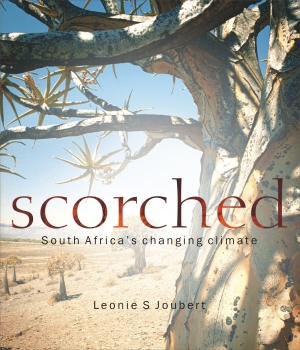
New Book on Climate Change in South Africa - "Scorched" ...


New Book on regional impacts of Climate Change


See also the book's website

The following book has just been launched - it gives a uniquely South African perspective on the problem of climate change and how it will impact on the region. Thought the following information might be of interesting to all of you:

Scorched: South Africa's Changing Climate (Wits University Press)

Leonie S Joubert

Scorched is a vivid journey through southern Africa's mesmerising landscapes as climate change sets in. It wanders through the KwaZulu-Natal Midlands to capture the last faltering calls of a rain frog that was named after the hobbit Bilbo Baggins. The author pauses for thought following an elephant stampede to consider how savannahs might shift in an altered climate. She trails the wading birds of the West Coast into the high Arctic tundra for their annual breeding season before returning to a Cape which is crisping over as drought continues to grip the province.

Another world exists somewhere beyond the global politicking of super powers and petrostates. This is the place where a solitary bee continues to pollinate the pale, demure flower of an orchid near Darling, or where the limey coral skeleton hosts its colourful algae on a Sodwana reef. These plants and animals – many of which are unique to the region – continue to do what their ancestors have done for millions of years. Yet the world is shifting its shape around them. In places it is warming and drying, elsewhere the rains come in greater deluges. Some are abandoned by the other plants and animals with which they have cohabited, as species retreat before the onslaught of rising greenhouse gases and altered weather patterns.

Scorched marvels at the world in which we live: the improbable balance of the air round us and the way it banks away the Sun's energy to keep us warm and thriving, the way life has evolved in this planetary incubator and how one species has risen up to become a potent geophysical force with the ability to shift a system which has evolved over 4 600 million years.

Scorched gives powerful local colour to a global problem. It ponders the morality of the changes humankind has wrought, and the future of life as we know it.


Leonie Joubert studied journalism and history at the universities of Rhodes and Stellenbosch. It was her enduring fascination with the human condition and its place in the natural order of things that led her to take up science writing from a small study in Wynberg, overlooking the Cape peninsula. She is the recipient of a Merit Award in the 2006 SAB Environmentalist Journalists of the Year Awards – Print Media "in recognition of an outstanding contribution to the field of environmental journalism".

1 86814 437 2
210x190, 264pp
November 2006
R180.00 / US$29.95
978 1 86814 437 2

Please send orders to:

Africa:
Book Promotions, PO Box 5, Plumstead 7800
Tel: 021 707 5700
Fax: 021 707 5795
orders@bookpro.co.za

US:
Transaction Publishers, 390 Campus Drive, Somerset, NJ 08873, USA
Tel: 732 445 1245
Fax: 732 748 9801
http://www.transactionpub.com/

UK / Europe:
The Eurospan Group
Tel: +44 207 845 0803
Fax: +44 207 379 3313
http://www.eurospanonline.com/

Cape Nature Biodiversity Review ...

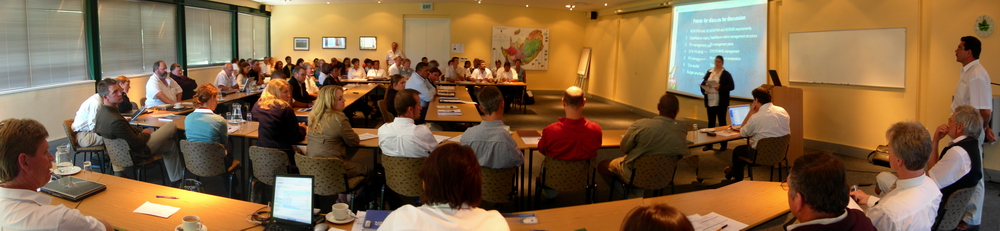
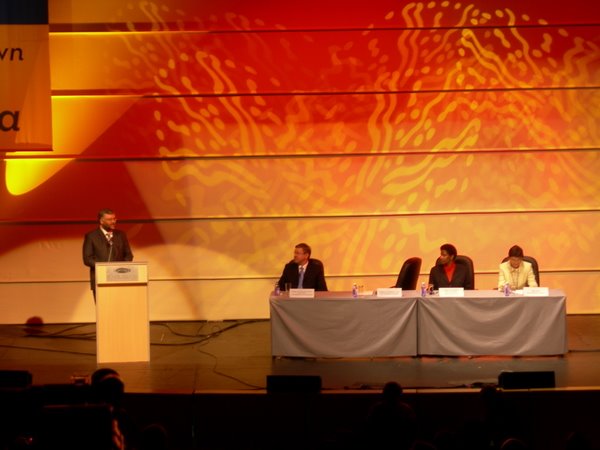
Today I'm attending the Cape Nature Biodiversity Review.

Here is a pic of the gathering


05 November, 2006

National People and Parks Workshop ...

Here is a link to a post on my other blog about the National People and Parks workshop that I attended recently

The Stern Report on the Economics of Climate Change ...

You can download the actual report and associated reviews here

04 November, 2006

Climate change special: State of denial ...

Interesting article from NewScientist here

12 October, 2006

New NEMA EIA Regulations workshops ...

The Department of Environmental Affairs and Development Planning (Western Cape Province), in conjunction with Strategic Environmental Focus (Pty) Ltd, cordially invites you, as an interested party, to attend an informative and expounding workshop on the National Environmental Management Act, 1998 (Act No. 107 of 1998) (NEMA) and the new NEMA Regulations (GN No. R. 385, GN No. R. 386 and GN. R. 387 of 21 April 2006).

The intention of the two-day training workshop is to provide clarity on issues and/or concerns regarding the new NEMA Regulations and how they will be implemented in the Western Cape.

The target audiences for these workshops include municipalities (in particular, Councilors, Town & Regional Planners, Technical Services Engineers, Environmental staff and Project Managers), government departments, consultants, business and industry and members of public.

There will be a series of workshops throughout the Western Cape. However, the workshop that falls within your area will be held at the location as set out below:

Karoo (Prince Albert) 19-20 October (RSVP 12 October )
Overberg (Caledon) 31 October & 1 November (RSVP 23 October)
Cape Town 6-7 November (RSVP 30 October)
Boland (Stellenbosch) 8-9 November (RSVP 1 November)
South Coast (George) 13-14 November (RSVP 6 November)
West Coast (Piketberg) 16-17 November (RSVP 9 November)

Please ensure that you register before the RSVP date, by replying to the contact details as set out below, so that the necessary catering and logistical arrangements can be made.

Strategic Environmental Focus (Pty) Ltd
P. O. Box 1330
Durbanville
7551
Tel: (021) 979 3822
Fax: (021) 979 3830
E-mail: Victoria@sefsa.co.za

You are urged to make use of this opportunity to gain a greater understanding of the new environmental regulations.

Draft Off-Road Route Guidelines ...

Dear Stakeholder

Draft Off-Road Route Guidelines that are now available for public review.

A detailed letter about the whole guideline process is available from the contact person detailed at the end of this post.

Unfortunately these document are too large to send as attachments, and you are requested to download them from either www.savannahSA.com or www.capegateway.gov.za/eadp

I have downloaded them on my dial-up system and it took a total of 18 minutes to download all three documents. I recommend that you 'right-click' on "View" and use "Save Target As" - this should facilitate the download process.

The files are as follows:
* Planning and Managing Sustainable Off-Road Routes: A Guide for Route Planners and Operators - 3,196kb

* Assessment and Evaluation of proposed and existing Off-Road Routes: A Guide for Environmental Assessment Practitioners and Authorities, and Route Planners - 1,968kb

* Environmental Ethics and Sustainable Use of Off-Road Routes and Trails: A Practical Guide for Recreational Trail Users - 133kb

The letter also includes details of two public meetings that will be held to discuss comments regarding the guidelines.
They are as follows:

a.. Cape Town - Wednesday 25th October, 9.30am, Kirstenbosch Stone Cottages (2-3 hours as needed)

b.. George - Thursday 26th October, 10.30am, King George Protea Hotel (2-3 hours as needed)

Contact:
Please reply to Kathy Leslie, wleslie@iafrica.com if you are able to attend
either meeting. Any other comments or queries can be forwarded to Kathy or
Karen Jodas of Savannah Environmental by 9th November 2006.

Kathy Leslie 083 325 5615 or 021 671 9350 (fax 088 021 671 9350)

All ISO certified companies - capacity building opportunity ...

A must attend for all ISO certified companies to keep you up to date with the latest information - 24 August at the Plastics Federation, Midrand.

You are invited to attend this highly informative workshop to be held at the Koeberg Visitors Centre in Koeberg on 26th October 2006. The programme is designed to inform on a range of important topics which currently challenge industry and are of particular importance to those who manufacture, fill, use, empty, dispose, reprocess or recycle industrial packaging and especially those who have ISO certification to keep them up to date with new legislation and best global industry practice.

Speakers include Provincial Government on the Green Scorpions approach to compliance, monitoring and enforcement and new Waste legislation, SANAS on what SANAS Accreditation means and why it is important to your certification body to several innovative ways for recycle of common waste streams including ewaste as well as feedback from the recent International Industrial Packaging Conference in San Francisco.

Secure your place by completing and returning the attached registration form by fax 032-942 8328 or email liz@rcmasa.org.za and do pass on a copy to anyone you know who should attend.

For more information on this stunning venue, please visit the Eskom Website on www.eskom.co.za.

Look forward to seeing you on the 26th.
Best regards, Liz and Lee-Anne

PO Box 894
Umhlali
4390
liz@rcmasa.org.za
tel: 032-942 8256
fax: 032-942 8328

Wetland service provider required ...

Dear wetlanders

SANBI is acting as the national focal point for a project on the
sustainable management of inland wetlands in southern Africa, funded
by the Global Environment Facility and implemented through International
Water Management Institute, IUCN and Food and Agriculture Organisation.

IUCN Regional Office for Southern Africa, which is responsible for the
component of the project dealing with assessment of needs for capacity
development, would like to appoint a service provider to undertake a
short study on policies, strategies, curricula and institutional
arrangements for wetland management in South Africa. A ToR is available for more information.

Anyone interested in undertaking this work should submit to me the CVs
of a proposed two person team before 18 October 2006.

Please note that the budget for this work is fixed and is included in
the ToR, so it is implicit that you will need to scale the intensity
of the study to fit the funds available.

Contact person:
John Dini
Programme Manager
Working for Wetlands
South African National Biodiversity Institute
Private Bag X101, Pretoria, 0001
South Africa
Tel: +27 12 843 5292
Fax: +27 12 843 5205
Cell: 083 420 7988
Email: dini@sanbi.org
www.sanbi.org

24 September, 2006

Global ocean cooling ...

See this interesting post about a measured recent cooling in ocean temperatures - global warming with speedbumps!

Global Warming ! ...

Global warming is essentially caused by the energy that is normally reflected back off the earth's surface being absorbed by the polluted atmosphere rather than passing through unpolluted air back into space. This is due to the recent dramatic increase in carbon dioxide and methane largely caused by the burning of fossil fuel, coal and oil.

On 12 Sept I flew up to a meeting in Pretoria. The following pics are just three of a series that I took as I flew back from Johannesburg to Cape Town. I was hoping to illustrate the improvement in air quality as we flew south, intending to use the pics in a schools presentation on Climate Change that I am preparing. I was not disappointed.


This first picture was taken shortly after we took off from Johannesburg (now Oliver Tambo) International Airport. You can just see the airport through the smog on this fine spring day!


This picture was taken about half way through the two hour flight over the southern Free State, just approaching the Great Karoo. The poluted air mass, left, that covers the northern half of the country where all our coal fired power stations are situated can be clearly seen. The cloudy area on the right of the picture was the extreme northern limit of the cleaner unpolluted southern ocean airmass.


This pic is taken about 18h00, two hours after the first picture. It shows the mountains about 60km north of Cape Town. Compare the great visibility through the atmosphere with the first picture.

Eish, Im glad to live in Cape Town.

05 September, 2006

GEF Assembly 7 ...

Launch of a book on the GEF funded C.A.P.E. Programme - see here

The C.A.P.E. publication, Fynbos Fynmense – people making biodiversity work, was launched at the Cullinan Hotel in Cape Town on the 28th of August 2006. The event, which was held together with the 2006 EnviroMedia Conference, was well attended. Attendees included the Western Cape Provincial MEC for Environment, Planning and Economic Development, Tasneem Essop, as well as representatives from the World Bank, United Nations Development Programme and the Critical Ecosystems Partnership Fund.

The book is a culmination of the efforts of members of the C.A.P.E. Coordination Unit, Ally Ashwell and Sandra Turck and is the fourth volume of the SANBI Biodiversity Series. It illustrates the results of the C.A.P.E. partnership and provides examples of creative thinking in promoting biodiversity conservation in the context of sustainable development. It is hoped that the book will contribute to the dissemination of lessons learned from the C.A.P.E. Programme to other bioregional programmes.


Trevor Sandwith, co-ordinator of the programme at the podium, Ally Ashwell on his left (holding a copy of the book) the primary editor and others on the editorial team.


Minister Tasneem Essop (W Cape Prov Minister for Economic Affairs and Environment), and others receiving boquets after the book launch.


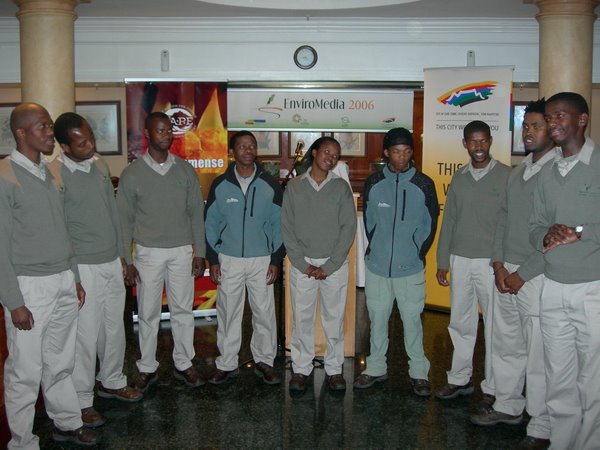
The Hoerikwaggo Table Mountain Trail Guides telling their moving story - see here for details.
They were all previously unemployed persons who were given a chance of a lifetime and seem to have grasped the opportunity with both hands.


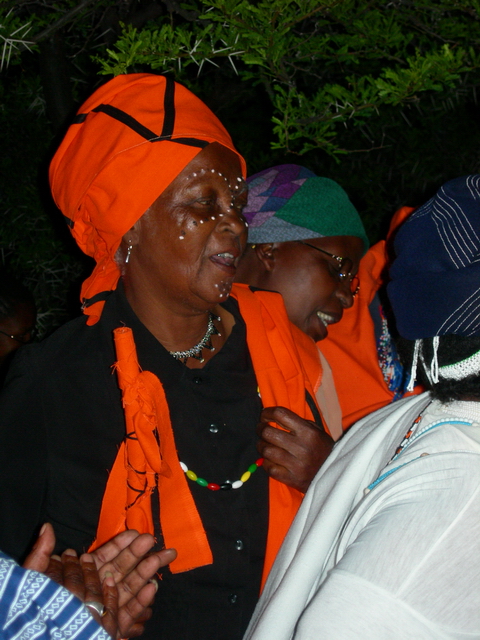
Cape minstrels taking part in the opening ceremony. In my oppinion this ceremony was kitch in the extreme and exposed among the poorest cultural offerings Cape Town had to offer! But then I'm no expert in that field.


Formalities of the opening ceremony. Left to right, W Cape Premier Ebrahim Rasool, National Environment and Tourism Minister, Martinus van Schalkwyk, National Deputy President, Phumzile Mlambo-Ngcuka and GEF CEO, Monique Barbut.

04 September, 2006

GEF Assembly 6 ...

I won't bother to report all the formal stuff from the GEF Assembly but you can find the comprehensive IISD reports here and the Assembly documents here

When and if I get an evening free I'll post some of my own photographs of the event.

I also spent the weekend up the west coast with Nicolle Glineur of GEF and have lots of lovely photos of spring flowers.

International Day for Biological Diversity Theme - 22 May 2007 ...

The Secretariat of the Convention on Biological Diversity announced that the focus of the 2007 International Day for Biological Diversity (IBD), 22 May, will be on Biodiversity and Climate Change.

See here for details.


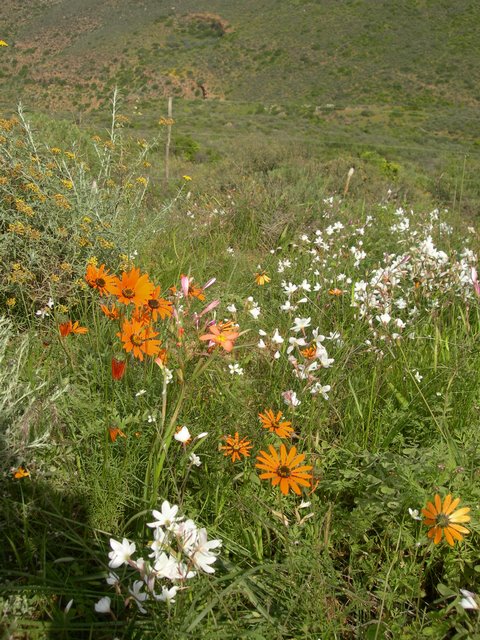
Spring flowers in the Bidou Valley, east of Clanwilliam, over the Pakhuis Pass through the Cedarberg. Western Cape Province, South Africa

28 August, 2006

GEF Assembly 5 ...

Registration for the GEF Assembly got underway today.
Gigi and I went down early to avoid the queues


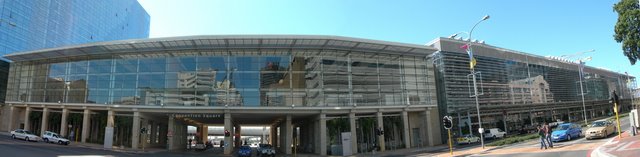
Cape Town's International Convention Centre (CTICC) where the GEF Assembly will meet and most of the side events will take place


Banner above registration.


The registration desk before the mad rush


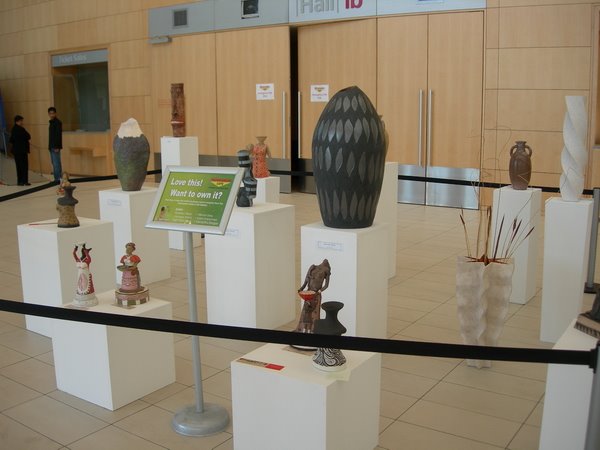
Display of crafts in the foyer of the CTICC


Street banner outside the CTICC - please excuse the alien invasive Cassurina/Beefwood on the left!


At 15h00 an informal reception was held at Kirstenbosch National Botanical Garden.
It was a warm sunny day, what we call berg (mountain) wind weather that preceedes a cold front! Tomorrow is going to be cold and rainy in the afternoon - that should surprise many of the delegates after todays perfect spring weather!

What a pitty that not a single member of our department, other than myself, attended this event. The only ones that were there were a few souls that had been roped in as volunteers, standing around handing out 'goodie' bags to the deleates. What a great opportunity to network with very influential international and and national luminaries involved in biodiversity funding. All the senior officials of the national department's international relations and biodiversity management divisions from Pretoria attended. Here we sit with two biodiversity hotspots of international significance in our province and all our .......... resists making career limiting statements .......... Ag shame - its only about biodiversity and ecosystem services!


The 'Silvertree' restaurant where the reception was held.


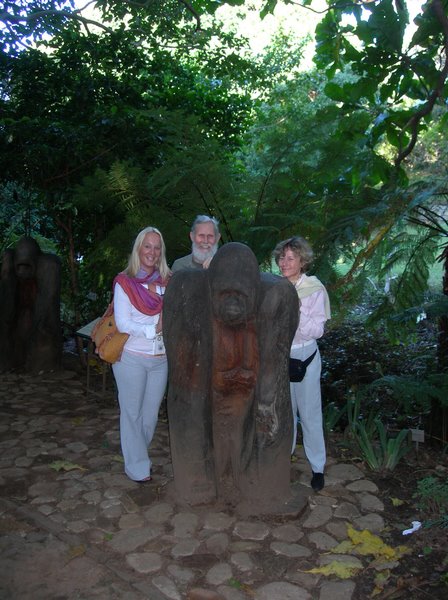
Some of us decided to walk in the garden in the beautiful spring weather. Nicole Glineur, right, is Programme Manager: Biodiversity of the GEF and Rachael S?? is with the GEF's small grant facility in New York. That's yours truely in the middle - the grey one not the dark brown one, thank you!


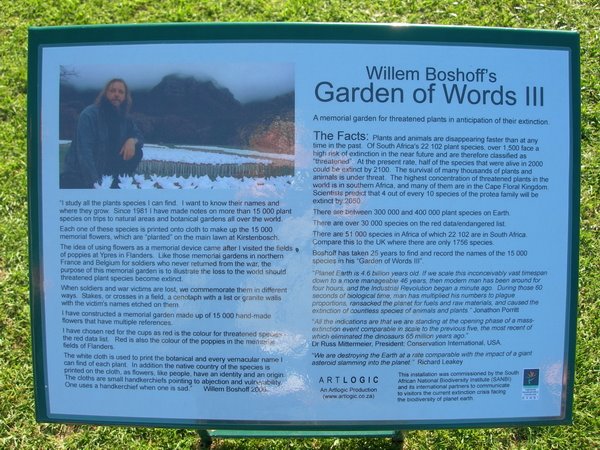
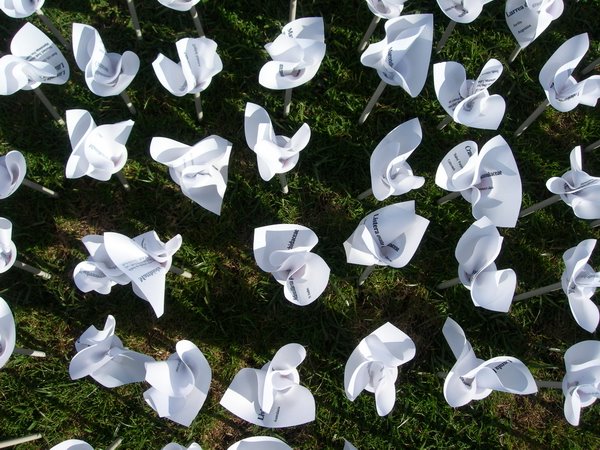
William Boshoff's 'Garden of Words III' - On the lawn above the visitor centre a local South African artist, Willem Boshoff, had put up an extremely interesting atistic installation. You can read all about it on the notice above (Click on the picture to enlarge it).

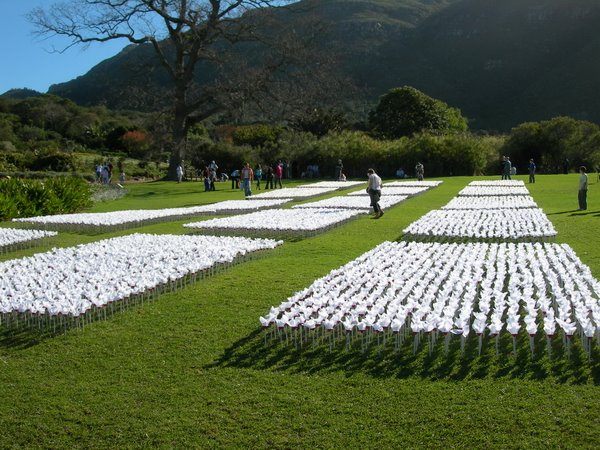
Below are a range of pictures that I took of the installation.

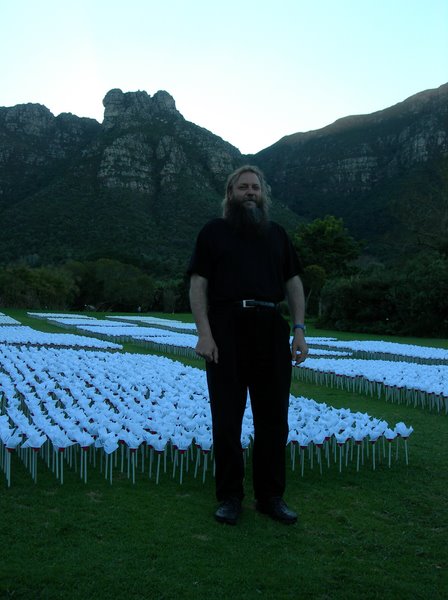
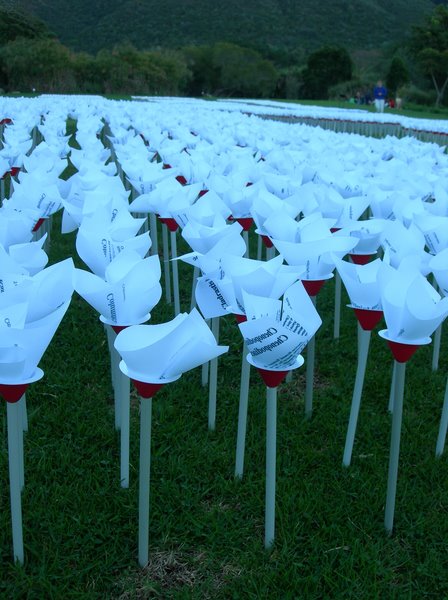
The installation comprises 15 000 'artificial flowers' representing 15 000 endangered species and has been set up in Kirstenbosch National Botanical Garden to bring to the attention of the visitors the plight of the worlds plant biodiversity.


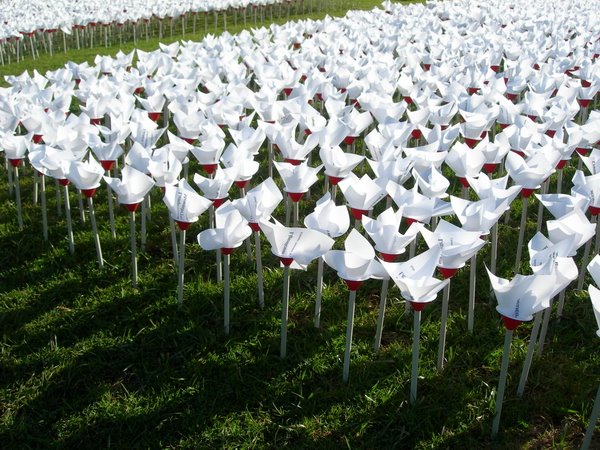
The inspiration comes from the fields of gravestones at Flanders


The red cups represent poppies


The folded handkerchiefs represent sadness and as well as forming petals when pressed into the 'poppies'


Willem posing in front of his installation with Nursery Buttress behind.


The words are species names and localities of endangered plants. You can't really read them, folded as they are into the 'poppies'. This represents the fading of the species. Soon they will just be memories. Eventually they'll be forgotten!


I'm extremely tempted to nip into the garden late one evening and add an extra row of poppies with certain selected names of my own.


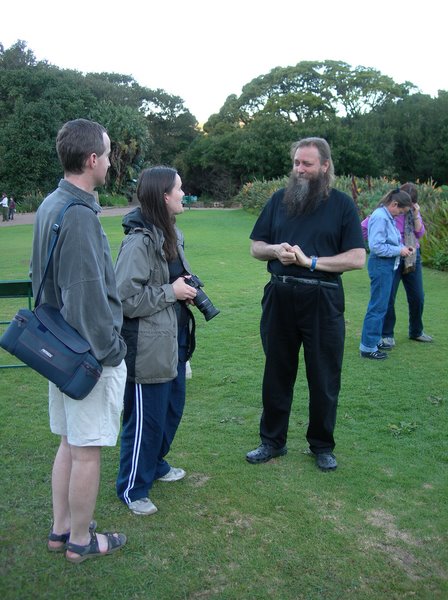
Willem Boshoff, the artist discussing his installation with a couple of visitors to Kirstenbosch

GEF Assembly 4 ...

The IISD Reporting service that will report on the GEF have their links page here.

IISD's main 'Linkages' page is here.

27 August, 2006

GEF Assembly 3 ...

On Friday 25 August Gigi and I were invited to a small cocktail function of UNDP staff and some leading South African biodiversity luminaries arranged by Gugu Agha, head of GEF's Communications division.

The function was held at Gugu's appartment in Camps Bay.


Gigi (SANBI, Cape Town), Nik Sekhran (UNDP, Pretoria)


Sally Nittman


Eddie Russell (UNDP, Pretoria), ?, Judy Beaumont (DEAT, Pretoria)


Merle Huntley chatting to Alan Rodgers (UNDP, Nairobi)


Judy Beaumont, ?, Gugu Agha (UNDP, Geneva)

Shame, Gugu was down with a really bad cold.


Nik Sekhran, Brian Huntley (Acting CEO, SA National Biodiversity Institute SANBI) and Nicole Glineur (GEF, Biodiversity Programme Manager, Washington)


Nik Sekhran, Kristal Maze (SANBI, Birector Biodiversity, pretoria) and Nicole Glineur


Phil Desmet and Nick ? (UNDP)


Gigi, Alex Cote (UNDP, Pretoria) and Trevor Sandwith (C.A.P.E., Cape Town)

GEF Assembly 2 ...

See my first post on the 4th GEF Assembly here.
Michelle Garforth has published some useful info here and there is some other useful perspectives here particularly on biosafety projects.

I'm off to register for the Assembly tomorrow and will keep you posted.

23 August, 2006

Biofuels workshop - 15 September ...

The 'Western Cape Task Team for Renewable Fuel' presents a simposium at the University of Stellenbosch on 15 September 2006. The purpose of the simposium is to discuss the key issues relating to the development of a bio-ethanol industry in the Western Cape


For programme, registration forms etc contact:
Wessel Lemmer
> Agricultural Economist
> Department of Agriculture: Western Cape
> Private Bag X1,
> Elsenburg,
> 7607,
> South Africa
> * Tel: + 27 21 808 5193
> * Cell: + 27 21 (0)82 907 3396
> * Fax: + 27 21 808 5210
> * E-mail: wessell@elsenburg.com
> * Web: www.elsenburg.com

22 August, 2006

Directorate Srategic Environmental Management, Strategic Planning Session ...


Mark Gordon addressing the Directorate: Strategic Environmental Management at our Strat Planning meeting.

The placing of this photo on this blog was a demo to Mark that the quickest way for him or the Minister to see what is going on at a site of environmental damage or illegal activity was for someone in the area to photograph the activity and blog it using cell phone connection to the internet. The pics would then be instantly available to anyone who had access to the internet.

Oh, the marvels of instant communication.
I had this picture up within 15 minutes of him quering the issue during the strat planning session!

09 August, 2006

Shutdown of Prudhoe Bay Oilfield - BP, Alaska ...

The oilfield at Prudhoe Bay in Alaska has been shutdown following a failure of the trans-Alaska pipeline and a major oil spill. This seems to be a major environmental incident that has received very little news coverage here in South Africa. Apparently the pipeline is in a very poor state of repair and a large section will need to be replaced, causing a two to three month shutdown of the oilfield and having a significant impact on the price of oil.

For more information see Google News links to stories about the incident.

You can see lots of pictures of the incident here.

07 August, 2006

Revision of Table Mountain National Park Management Plan ...

The TMNP is currently reviewing/developing the TMNP Management Plan.
The three documents (Park management Plan, Conservation Development Framework and Tokai-Cecilia Management Framework) are all interrelated management tools that will guide the management of the Park into the future.

Open days, with a focus on Tokai-Cecilia, will be held for the purpose of presenting these draft documents for public comment:
Date: Monday 14th and Tuesday 15th August 2006 Time: 14h00 to 19h00
Tokai-Cecilia Workshops: 17:00 on both days
Venue: The Main Hall, Chrysalis Academy, Porter School, Tokai

For further information please contact:
Park Management Plan:
Mike Slayen (michaels@sanparks.org)
Chad Cheney (chadc@sanparks.org)
Table Mountain National Park
Tel: 021 – 701 8692
Fax: 021 701 8773

Conservation Development Framework:
Rod Cronwright (rodc@setplan.co.za)
iKapa Enviroplan
Tel: 021-422-1946
Fax: 021-424-3490

Tokai-Cecilia Management Framework:
Sarien Lategan (sarien@geostratics.co.za )
Geostratics CC: Town Planners, Environmental consultants, Research
Tel. 021-8510078
Fax 021-8520966

03 August, 2006

Suggestions for improving vehicle fuel economy ...

... and minimising atmospheric carbon emissions

– Dennis Laidler

As an environmentalist, particularly concerned with climate change, I must admit to ‘getting off’ on minimising my vehicle’s fuel consumption rather than ‘voet in die hoek’ or aggressive driving. Fortunately or unfortunately I spent my formative driving years during the era of extremely severe fuel rationing in the then Rhodesia and later during the South African fuel restrictions of the late 1970’s. As a university student I remember driving a Volkswagen beetle regularly between the then Salisbury and Cape Town at a very strict 80km per hour - whew! Unfortunately the backgrounds to both of these fuel shortages were political. However, today we have other reasons prompting us to pay attention to our vehicle’s fuel consumption. Firstly, every vehicle user should take the issue of minimising their personal contribution to global carbon emissions seriously. Secondly it’s cost. The recent increase in fuel price affects almost every vehicle user, and in my humble opinion we are not going see hydrocarbon fuel prices decrease in future.

This all said, I’ve compiled the following suggestions for saving fuel, minimising your personal carbon emissions and saving you money. To supplement my own thoughts on the issue I did some research on the Internet, including the United States Environmental Protection Agency and other sites, and was reminded of many tips that had not immediately come to mind. I can’t, of course, claim that any of these ideas are unique or new and I’m sure you are aware of some of them already.

Having two sons that relatively recently obtained their driving licences caused me to refocus on the quality of my own driving style. I have now come to regard my driving time as ‘quiet quality time’ rather than ‘stress time’. As a positive side effect I have found that focusing on minimising my fuel consumption on every trip, even commuting to work, has taken a lot of the aggression out of my driving style.

I hope that you find the suggestions below useful and that they prompt you to reduce your fuel usage and modify your driving style.

Fuel saving suggestions:

1. Plan your trips – the easiest way to save fuel is not to drive your vehicle! If you have to drive plan your vehicle use and try to do as many chores on a single trip as possible. Use a bicycle or your two legs for short trips.

2. If you have to drive take the shortest and/or least traffic congested route possible – the less time you are on the road or idling the engine while going nowhere the better.

3. Don’t idle your car’s engine for more than 1 minute - If you need to idle your vehicle’s engine for a while, just turn the engine off. Contrary to popular belief, having to restart your car isn't worse for your fuel economy if you're going to idle for longer than 1 minute. Don’t use the drive through at your local burger joint. Park your vehicle and turn off the engine!

4. Use your right foot as lightly as possible on the accelerator – The greatest fuel waster while driving is rapid acceleration. From a standstill or when rolling, accelerate GENTLY up to your desired speed and change up to the next higher gear as soon as reasonably possible. Always use the highest reasonable gear for your speed. Generally speaking, the lower the engine revs the more fuel efficiently it is running.

5. If your vehicle has one, display your vehicle’s trip fuel consumption meter every time you drive and you’ll be surprised at the positive impact it has on your driving style and fuel consumption.

6. Use your right foot as lightly as possible on the brakes – If you have to apply the brakes hard at any time while you’re driving, then you are not using your powers of anticipation and your vehicle is wasting fuel. Applying the brakes hard merely converts all that expensively fuelled momentum into heating your car’s brake disks. What a waste! Keep an eye well ahead while you are driving and take your foot off the accelerator AS SOON as it appears that you may have to slow down or stop. Rather apply the brakes gently, and coast slowly up to the obstruction. The traffic lights will turn green again or the obstruction may clear and you can continue without having to waste fuel accelerating from a standstill.

7. Load your vehicle as lightly as possible – Every kilo of weight in your vehicle has to be accelerated and decelerated every time you use your right foot so don’t carry around any unnecessary load.

8. Check your tyre pressures regularly – If your tyres are under-inflated, your vehicle has to work that much harder to spin the wheels. The friction caused by these soft tyres could be significantly increasing your fuel consumption. Not to mention the premature tread wear that will cost you serious money sooner rather than later. If you’d like to test this for yourself just try cycling a bicycle with under inflated tyres compared to one with correctly inflated tyres.

9. Have your vehicle’s wheel alignment checked regularly – Poor wheel alignment not only wears your vehicles tires unnecessarily but adds extra rolling resistance to your vehicle, unnecessarily increasing fuel consumption.

10. Reduce wind resistance – Do you ever go on a long trip and stack luggage on the roof of your vehicle? These bulky items can increase your fuel consumption by up to 5%. Instead of putting your bags straight onto the roof rack, try using an aerodynamic roof box for storage. Hard aerodynamic hard roof box models offer a sleek shaped storage bin that keeps wind resistance to a minimum. You can reduce fuel consumption by completely removing the box and roof rack from your vehicle when you don't need to use it. Even though they are aerodynamic, these roof boxes are only completely drag-proof when they're off the vehicle.

11. Truck/Bakkie/LDV owners – Adding a hard or soft tonneau cover over the load bay of your truck prevents airflow against the tailgate that will give you an immediate 5% to 10% improvement in fuel consumption, to say nothing of the extra security.

12. Have your vehicle serviced and tuned regularly in accordance with the manufacturers directions – The better tuned and lubricated your vehicles engine the better your fuel consumption will be.

13. Use your air conditioner as little as possible – your car’s air conditioner can increase your vehicle’s fuel consumption as much as 10%. Rather open the car windows a little for ventilation, especially at low speeds.

14. On the other hand don’t drive fast with your car windows wide open unnecessarily – open windows will increase your car’s drag, especially at high speed, and increase fuel consumption.

15. Don’t free-wheel downhill with the vehicle out of gear – This urban legend is a popular fuel saver myth. Not only is this ineffective at saving fuel, but it is extremely dangerous. There's no reason to cut-off your acceleration control – coasting with your foot off the accelerator uses the same amount of fuel. And, letting your vehicle free-wheel downhill can generate dangerous speeds.

16. It doesn’t make financial sense to sell your current vehicle merely to replace it with a more fuel economic one – The money saved through fuel economy will not compensate for the cost of the new vehicle. It’s expensive in both money and energy to make and to buy a new vehicle. But when the time comes to replace an old vehicle, you can get a very large reduction in your fuel bill by making an informed choice. Choose a small fuel-efficient vehicle rather than the typical South African ‘pocket rocket’! Luckily in this day and age this doesn’t mean having to forgo quality or luxury. My wife and I have recently replaced her city commuter with a Fiat Panda, European car of the year 2004, 2005 and 2006. Surprisingly this modern fuel-efficient 1200cc (4.6 litres/100km or 50 miles/gallon) vehicle is even available in two 4x4 versions if that is your ‘hot button’!

17. Diesel vehicles are generally 20% more economical than a similar petrol powered vehicle – Diesel should always be the first choice for anyone concerned with fuel economy. Modern diesel engines are also much more powerful and cleaner than those of 10 or 20 years ago but they are more expensive to make so you need to decide if the extra purchase price would be covered by the fuel savings. I found this not to be the case in South Africa for the vehicles in the price range I was considering.

02 August, 2006

Third Global Environment Facility (GEF) Assembly in Cape Town ...

The Third Global Environment Facility (GEF) Assembly is being hosted by the Government of South Africa from August 29-30, 2006 at the Cape Town International Convention Centre (CTICC).

All the relevant information is at the Assembly's Website

The most interesting document I have discovered is the Scientific and Technical Advisory Panel (STAP) Report on the Broad Scientific and Technical Issues that emerged during the Preceding Phase of the GEF and on Emerging Issus and Gaps

The GEF home page is http://www.thegef.org/

Champion Trees Project ...

Gigi just sent me an interesting link to DWAF's Champion Trees Project

The Department of Water Affairs and Forestry (DWAF) initiated a project to identify and protect trees worthy of special protection throughout South Africa. Such projects have been established in several countries, but this is the first of its kind in Africa. Champion trees are trees of exceptional importance that deserves national protection because of their remarkable size, age, aesthetic, cultural, historic or tourism value.

I see there is also info on protected trees here and you can download the latest list of protected trees here as a pdf file.

Clinton Foundation to Work to Reduce Greenhouse Gases ...

See link here

South Africa's Environmental Awareness Campaign appoints CEO ...

"Today, we start building an institution which will primarily seek to encourage all of us to further increase our appreciation for the role of the environment in growing our economy" said Onkgopotse JJ Tabane as he announced JP Louw as the newly appointed Chief Executive Officer of INDALO YETHU, South Africa's national environmental awareness campaign.

"Mr Louw emerges from a successful tenure as head of communications in the department of environmental affairs and tourism. He has earned an admirable reputation throughout the political terms of both Ministers Valli Moosa and Marthinus van Schalkwyk. It therefore came to us as an opportunity not to be missed when he applied for the post of Chief Executive Officer." Tabane further added that Louw comes as a seasoned communicator, with an impeccable organizational development experience and good exposure and understanding of environmental deliberations at both a local and international platform.

Expressing his appreciation about his selection to the post of Chief Executive Officer, Louw committed himself to work with his board members, other partner organizations and the general public in raising consciousness about the interrelated nature of economic growth, social development and environmental protection.

"The challenge is to ensure that whilst we host a successful 2010 Soccer World Cup, we realize the ideals of ASGISA and overall transform our society, we do so in a manner that will ensure that benefits are accrued to us today as well as to our future generations" said Louw. "Our intentions are to put all necessary systems in place and conduct relevant consultations between this period and the end of the year" further added Louw. "Come 2007 and we should be in the mode of all systems rolling".

INDALO YETHU is a national environmental awareness campaign and is also a legacy project of the World Summit on Sustainable Development legacy.

For further info contact:
JP Louw
CEO
INDALO YETHU
082 569 3340
jplouw@indaloyethu.co.za
visit us at www.indaloyethu.co.za

Presentation - Long-term greenhouse gas mitigation scenarios for SA ...

The South African Cabinet has approved and initiated the development of a greenhouse gas mitigation strategy for South Africa, utilising scenario building and options generating processes.

The process will be overseen by DEAT, who have asked ERC to manage the project.
Harald Winkler will give a short presentation on this new work.

Topic: Long-Term Mitigation Scenarios
Date: Friday, 4 August 2006
Time: 12:30 - 13:30
Venue: ERC seminar room, 6th floor, Menzies Building, University of Cape Town

Please feel free to forward this invitation to others who might interested.

Harald Winkler
Programme leader: Energy, Environment & Climate Change
Energy Research Centre, University of Cape Town
Private Bag
Rondebosch 7701
Cape Town, South Africa
Tel: +27 21 650-2100
Fax:+27 21 650-2830
www.erc.uct.ac.za


PS: You can even do your own personal bit for mitigating green house gas emissions, see here

01 August, 2006

Fuel Consumption Converter ...

My wife and I are about to purchase a new Fiat Panda to replace her aging VW Golf Chico 1600.
One of the primary factors that influenced our decision is its remarkable fuel efficiency.
Here is a link to a very useful Fuel Consumption Converter.

Don't bother to tell your American friends that your new car does 4.6 litres/100 kilometers, they won't understand at all. Maybe if you tell them your car does 50 miles/gallon it may cause them to pause for a moment (only a moment mind you) to think of their own outrageous contribution to atmospheric carbon emmissions and global climate change.

28 July, 2006

Heat Wave Shows Limits of Nuclear Energy ...

And, the Western Cape is apparently not the only region with Nuclear Reactor woes!

Here is an interesting article on the nuclear situation in Europe as a result of the current heatwave.

Are our Koeberg nuclear reactors on the coast cooled by sea water or fresh water? Sea water I guess. Or is sea water so corrosive it is used to cool a closed freshwater cooling system that actually cools the reactors themselves?

Global warming will sink the insurance industry? ...

See this thought provoking article from Climate Change News Digest

26 July, 2006

25 July, 2006

Earth Policy Institute ...

I've just added a permanent link under the 'Sustainable Development Links' in the right hand sidebar, to the 'Earth Policy Institute'. That site seems to have some very useful information and links.

For example see these articles on:
* The World After Oil Peaks;
* The Coming Decline of Oil; and
* U.S. Mayors respond to a Washngton Leadership Vacuum on Climate Change here

Supermarkets and Service Stations Now Competing for Grain ...

A thought provoking article about the competition between using grain to produce food and animal feeds or ethanol for vehicle fuel. In the light of the collapse of the recent international trade talks it looks like ethanol is leading by at least a head!
See this link.

For similar articles and more information on Earth Policy Institute,
please see http://www.earth-policy.org.

24 July, 2006

District Workshops for the Supplementation of the National EIA Regulations ...

Dear Stakeholders

We have finalised the details for the forthcoming series of district
workshops for the Supplementation of the national EIA Regulations project.
The project has been following a process of 1) mapping of geographical
layers (e.g. rivers, wetlands, rigdes, sensitive vegetation, urban areas
etc.), and 2) the parallel drafting of inclusion (NEMA 24(2) b) and
exclusion (NEMA 24(2) c) lists of activities for the WC Province.

At each district workshop a composite map (all layers) will be on display
for that district with one area selected for 'zooming in' to show some
detail. The DRAFT associated lists of activities for Basic Assessment,
EIA/Scoping and exclusions will be available, and the team will demonstrate
how these link in with the maps.

All workshops will take the form of an open-house session followed by a
discussion (Q&A) session. The open-house will allow stakeholders to view the
maps and get an idea for how the lists link to areas on the map, before
coming together for the discussion.

Workshop times will be as follows:
Cape Town - Belville Town Hall, 24 July - open house 14h00-15h30, discussion
15h30-17h00

West Coast - Saldanha Bay Protea Hotel, 25 July - open house 14h30-15h30,
dicussion 15h30-16h30

Beaufort West -Karoo National Park Conference venue, 25 July - open house
14h30-15h30, dicussion 15h30-16h30

Winelands - Joie de Vivre Paarl, 26 July - open house 14h30-15h30, dicussion
15h30-16h30

George - Far Hills Hotel just outside George, 26 July - open house
14h30-15h30, dicussion 15h30-16h30

Caledon at the Caledon Town Hall next to the Caledon Museum, 27th July -
open house 14h30-15h30, dicussion 15h30-16h30

Please note: This is not a capacity building session as the project is still
going through its development process and all products presented are DRAFTS
for discussion. (DEADP will be conducting capacity building sessions on the
new national EIA regulations (effective 1 July 2006) in the six districts
shortly after these workshops).

It is also recommended, although not essential, that stakeholders have a
look at the lists of activities for Basic Assessment and EIA/Scoping prior
to attending the workshops in order to better understand the additions and
exclusions that are to be discussed. These lists are available on
www.capegateway.gov.za and www.environment.gov.za

We have not been able to confirm every response we have received. If you
have emailed a reply to Shawn Johnston or Kathy Leslie, you can assume you
are down to attend the relevant workshop. If you are no longer able to
attend, please let us know soonest. If you have not yet replied, please do
so asap.

Regards,

Kathy Leslie - 021 671 9350 or 083 325 5615 (wleslie@iafrica.com)

Shawn Johnston - 083 325 9965 (swjohnston@mweb.co.za)

20 July, 2006

DEADP Annual Performance Plan ...

The Western Cape Provincial Department of Environmental Affairs and Development Planning's (DEADP) latest Annual Performance Plan is available on the departmental home page

Click on the top link under 'Latest Publications'.

National Wetlands Indaba 2006 ...

Organised by the Eastcape Wetlands Forum
Dates: 23-27 October
Venue: Stutterheim, Stutterheim Theatre

Programme and other details available from:
Conference secretary:
Juanita McLean
JUANITA@IWR.RU.AC.ZA

REN21 Press Release Global Status Report 2006 update ...

REN21
Renewable Energy Policy Network for the 21st Century

POSTAL ADDRESS Renewable Energy Policy Network
for the 21st Century
Tour Mirabeau, 39-43, quai André Citroën,
75739 Paris cedex 15, France
TEL (33-1) 44 37 14 65
FAX (33-1) 44 37 14 74
E-MAIL info@ren21.net
INTERNET www.ren21.net

REN21 Press Release Global Status Report 2006 update

2005: Record year for investments in renewable energy
New REN21 Global Status Report

PARIS, 18 July 2006 – Up from USD 30 billion in 2004 to USD 38 billion last year, 2005 was a record year for investment in the renewable energy sector.

According to REN21, the Renewable Energy Policy Network, wind power capacity grew by 24% in 2005 to reach 59 GW, and ten countries added over 300 MW of wind power, up from five countries that had done so in 2004.

These findings and more are contained in REN21’s 2006 update to its Global Status Report showing trends in renewable investment and policies worldwide.

The 2006 update is, like the first Global Status Report of 2005, a collaborative effort involving more than 100 researchers worldwide in a REN21 issue group with Eric Martinot as leading author, who presented the results in New Zealand today. The definitive version will be available on www.ren21.net soon.

Other findings in the 2006 update include:

- Biomass power production has increased by 50-100% in several countries.
- The US produced record amounts of ethanol fuel for cars, and three new EU countries became ethanol producers.
- Biodiesel production grew by 85% in 2005 and nine new EU countries became producers.
- Grid-tied solar power grew by 55%, led by Germany, now with more than 200,000 solar rooftops.
- Solar hot water capacity grew by 23% in China and reached record levels across Europe.

The renewable industry has captured investors’ attention in the past year more than ever before.

“Renewables are capturing increased attention of businesses and policy-makers around the world” said Mohamed El-Ashry, chairman of the REN21 Steering Committee.

The REN21 report estimates that at least 85 renewable energy companies or divisions have market valuations greater than USD 40 million, up from 60 companies or divisions in 2004. The estimated total market valuation of companies in this category is USD 50 billion, double the 2004 estimate, as several high-profile initial public offerings have recently taken place. The solar PV industry invested record amounts in new plant and equipment (about USD 6 billion), as did the biofuels industry (more than USD 1 billion).

Many new policies to support renewable energy were adopted over the past year, and many more were extended, revised, or discussed. Not only the EU and US were active, but more than 16 developing countries as well, including Brazil, China, Egypt, India, Mexico, Thailand, and Uganda. Most notable was that a number of countries dramatically stepped up targets and mandates for biofuels – ethanol and biodiesel mixed with conventional fuels. The number of countries with so-called “feed-in” policies for the purchase of power from renewable sources increased to 41, and the number of countries with future targets for the share of energy from renewables increased to at least 49. Initiatives for grid-tied solar power multiplied, including new initiatives in the EU, California and other US states, Australia, and China.

Note to Editors:

REN21 is a global policy network in which ideas are shared and action is encouraged to promote renewable energy. It provides a forum for leadership and exchange in international policy processes. It bolsters appropriate policies that increase the wise use of renewable energies in developing and industrialized economies. Open to a wide variety of dedicated stakeholders, REN21 connects governments, international institutions, nongovernmental organizations, industry associations, and other partnerships and initiatives. Linking actors from the energy, development and environment communities, REN21 leverages their successes and strengthens their influence for the rapid expansion or renewable energy worldwide. Background and further at www.ren21.net.
The REN21 Global Status Reports can be found at www.ren21.net

For more information please contact:
Paul Suding, REN21 Secretariat, at Tel: +33 1 44371465, E-mail: paul.suding@ren21.net

REN21 Press Release

NEMA EIA regulations: draft guidelines, forms, transitional arrangements and capacity building workshops ...

NEMA EIA REGULATIONS: DRAFT GUIDELINES, FORMS, TRANSITIONAL ARRANGEMENTS AND CAPACITY BUILDING WORKSHOPS.

On 21 April 2006 the Minister of Environmental Affairs and Tourism promulgated regulations in terms of Chapter 5 of the National Environmental Management Act, 1998 (Act No. 107 of 1998) (“NEMA”) (Government Notice No. R. 385, R. 386, and R. 387 in Government Gazette No. 28753 of 21 April 2006 refer). The regulations replace the environmental impact assessment (“EIA”) regulations that were promulgated in terms of the Environment Conservation Act, 1989 (Act No. 73 of 1989) in 1997 and also introduces new provisions regarding environmental impact assessments. The NEMA EIA regulations came into effect on 3 July 2006 (Government Notice No. R. 612, R. 613, R. 614, R. 615, and R. 616 in Government Gazette No. 28938 of 23 June 2006 refer).

Availability of draft guidelines:

The Department has developed a series of guidelines and information documents (NEMA Environmental Impact Assessment Regulations Guideline and Information Document Series) that provides information and guidance for applicants, authorities and interested and affected parties (“I&APs”) on the procedures to be followed. The following guidelines are already available:

· Guideline on Transitional Arrangements
· Guideline on Alternatives
· Guideline on Public Participation
· Guideline on Alternatives
· Guideline on Appeals
· Guideline on Exemption Applications

These guidelines are intended to assist in the capacitating and understanding of all involved in the process and to facilitate the transition from procedures in terms of applications received by the Department under the Environment Conservation Act, 1989 (Act No. 73 of 1989) (“ECA”) to the procedures in terms of the NEMA EIA regulations. Included in the guideline and information series is a Guideline on Transitional Arrangements developed with respect to Chapter 9 of the NEMA EIA Regulations. This guideline specifically addresses the transitional arrangements for pending applications received by the Department under ECA and provides guidance on the procedures and consideration of such applications.

Although the Department is confident that the guidelines will provide guidance to all the different stakeholders, it however remains the task of applicants and their environmental assessment practitioners (“EAPs”) to familiarize themselves with the new procedures and requirements of the NEMA EIA regulations, and specifically the transitional arrangements. The Department therefore expects applicants (together with their consultants) to apply their own minds to the new requirements.

The lists of activities identified in terms of Sections 24 and 24D of the National Environmental Management Act, 1998 (Government Notice No. R. 386, and R. 387 in Government Gazette No. 28753 of 21 April 2006) requiring either a Basic Assessment process or a Scoping and EIA process are very prescriptive in their identification of which activities would require an environmental authorization. These lists when used in conjunction with the NEMA Environmental Impact Assessment Regulations Guideline and Information Document Series and the Department’s Application Forms and Templates (see below) should provide more than adequate assistance to those either intending to determine whether a potential development will require an environmental authorization or, intending to submit an application to the Department. For clarity purposes and based on the needs of environmental consultancies, EAPs and others, the Department is currently finalizing a detailed interpretation guideline on the lists of activities identified in Government Notice R. 386, and R. 387. The Department will make this guideline available shortly to provide further assistance in this regard.

Please note that all the draft guidelines are currently available for comment by all interested and affected parties. All the relevant draft guidelines are available and can be downloaded from the Department's website .

Notwithstanding this, the Department will entertain significant/noteworthy enquiries pertaining to the NEMA EIA Regulations and these must be directed to the Department’s NEMA EIA Helpdesk (contactable on: Tel. (021) 483 4098; email: EIAINFO@pgwc.gov.za ). However, it must be noted that the function of this service is not intended to ‘do the work’ for environmental consultancies nor replace the requirements of EAPs as determined by Regulation 18 of the NEMA EIA Regulations (General Requirements for EAPs) and should therefore not be abused.

Application forms and templates:

The Department has also developed a number of forms in terms of the NEMA EIA Regulations. The following forms are already available:

· Notice of Intent to Apply Form
· Application Form
· Basic Assessment Report Form
· Notice of Intent to Appeal Form
· Appeal Form

The above forms can be downloaded from the Department's website.

It is important to note that the application form is relevant for both the Basic Assessment and the Scoping/EIA process. It is also important to note that anyone who intends to submit a Basic Assessment Report, must submit the notice of intend to apply at least 14 days before initiating the Basic Assessment process. This is an essential step to provide this Department with information to advise the EAP or applicant on the relevant matters, as well as providing a departmental reference number that must be quoted on all information (by the EAP, applicant or interested and affected parties) submitted to this Department. Note that forms that contain inadequate information will be rejected. All documentation submitted to the Department that does not contain the departmental reference number, will be rejected or disregarded.

Transitional arrangements:

Seven different scenarios are discussed in the Department’s Guideline on Transitional Arrangements. Please however specifically take note of the following two scenarios:

· Where an application submitted in terms of the previous EIA regulations (in terms of the Environment Conservation Act, 1989) (an “ECA application”), is pending and the same components of the development (that were listed under ECA) also constitute a listed activity under the new NEMA EIA regulations, the following must be noted: According to the NEMA EIA Regulations an application for authorisation of an activity submitted in terms of the previous regulations and which is pending when the NEMA EIA Regulations take effect, will be dispensed with in terms of the previous regulations as if the previous regulations were not repealed (Regulation 84(1)). According to the NEMA EIA Regulations authorisations issued for applications that were pending in terms of the previous regulations when the NEMA EIA Regulations take effect, will be regarded to be environmental authorisations issued in terms of the NEMA EIA Regulations (Regulation 84(3)). In accordance with the Regulations anything done in terms of the previous regulations and which can be done in terms of a provision of the NEMA EIA Regulations will be regarded as having been done in terms of the provision of the NEMA EIA Regulations (Regulation 83(1)). Therefore where an ECA application is pending and the same components of the development that were listed under ECA are now also listed under the NEMA EIA regulations, and the impacts associated with the entire development (and therefore also the impacts associated with the activities in terms of the NEMA EIA Regulations) were considered in the EIA process undertaken in terms of the ECA, a new application in terms of NEMA will not be required.

· It must also be noted that in any instance where development activities that are regarded as a listed activity in terms of the NEMA EIA regulations, that have not commenced before 3 July 2006 (regardless if an application has been submitted to other relevant authorities in terms of other relevant legislation), will require written environmental authorisation in terms of the NEMA EIA Regulations from this Department before such activities can commence.

Capacity building workshops:

Also note that the Department will be holding six capacity building workshops at different venues within the Western Cape shortly. The purpose of this capacity building initiative is to familiarise external stakeholders with the provisions of the new regulations and its implications so that stakeholders can participate meaningfully in the new EIA process. It is also aimed at developing capacity amongst municipalities, provincial and national government departments in the Western Cape, environmental and planning consultants, NGO groups, business and industry, as well as members of the public. The dates and venues for these capacity building workshops will be advertised in the press and on the Department’s website shortly.

Society for Conservation Biology - Annual Meeting ...

21st Annual Meeting,
Port Elizabeth,
South Africa
1 - 5 July 2007
www.conbio.org/2007

One World
One Conservation
One Partnership

Important Dates:
Call for symposia and workshops: 14 July - 16 October 2006
Call for short courses: 14 July - 13 November 2006
Call for abstracts, papers & posters: 16 October 2006 – 8 January 2007
Registration opens: 15 January 2007
SCB 2007 meeting: 1 – 5 July 2007

Institute of Environment & Recreation Management Convention ...

Institute of Environment & Recreation Management Convention 2006
13 - 15 September 2006
ICC Durban
"LIVEABLE COMMUNITIES THROUGH SERVICE DELIVERY"
Further info contact:
IERM Secretariat
ierm@vdw.co.za
Tel: (011) 789 1384
Fax: (011) 789 1385
www.ierm.org.za

5th Southern Connection Conference ...

5th Southern Connection Conference,
Adelaide South Australia
We have recently updated our website providing information on
registration, accommodation and helpful weblinks for visitors to
Adelaide.
We encourage you to visit frequently as there will be regular updates: http://www.ees.adelaide.edu.au/events/Southern_Connections/
Also available a conference poster for your notice bulletin boards.
(Let me know if you want a copy - Ingrid)
In the interest of others, it would be much appreciated if you could
post this within your area to advertise the Conference.

Kind regards,
Maria
--
Maria Lekis
maria.lekis@adelaide.edu.au
Administrator, Networking Environmental Sciences
School of Earth & Environmental Sciences
University of Adelaide, AUSTRALIA SA 5005
Darling Building, DP 418. Rm 209a
Ph:+61 8 8303 3952 Fax : +61 8 8303 4364
visit us at-->>>http://www.ees.adelaide.edu.au/

Seminar - Western Cape Fire Prevention ...

Western Cape Fire Prevention and Management Seminar.
6 and 7 September 2006,
Ganzekraal.

For full programme and registration details contact:
Susan Steyn
susan@dwaf.gov.za
Private Bag X16
Sanlamhof
7532
T: 021 - 950 7121
F: 021 - 950 7277
C: 082 808 2720

17 July, 2006

New staff at the Table Mountain Fund ...

The Table Mountain Fund (TMF) and WWF-SA are pleased to introduce the appointment of a new Manager and Assistant for the TMF. The new manager is Onno Huyser, who takes over the position previously filled by Julia Wood and who joined them on 1 July 2006. The new Assistant is Tamaryn Allan who replaces Zohra Parkar-Salie and will start with us on 1 August 2006.

The Table Mountain Fund is an independent sustainable funding facility, established to support the implementation of the C.A.P.E Strategy and specifically the conservation of the biological diversity of the CFR and its adjacent marine systems. Founded by WWF eight years ago, the TMF was co-capitalised through investments from South African custodians, as well as the Global Environmental Facility.

In conjunction with its partners, the Fund has historically focused its activities in the following conservation needs:

• Protection of prioritised habitats;
• Conservation within the working lowlands;
• Building environmental awareness;
• Control of alien invasives & restoration of natural Biodiversity
• Applied research that supports Biodiversity conservation
• Enhancement of the Global Conservation Status of the CFR
• Capacity Building of CAPE partner organisations

Please contact Onno Huyser at ohuyser@wwf.org.za or phone 021 762-8525 for more information.

13 July, 2006

Energy and Climate Change Short Course, ERC, UCT ...

The Energy Research Centre at the University of Cape Town will be hosting an Energy and Climate Change Short Course from 28 August - 1 September 2006. The details and application form can be obtained from Dr Debbie Sparks - see contact details below.

Please could forward this to any colleagues you think me be interested in attending.

--------------------------------------------
Dr Debbie Sparks
Energy Research Centre
University of Cape Town
Private Bag, Rondebosch, 7701, South Africa
Tel: +27 21 650 2420 Fax: +27 21 650 2830
Email: debbie@erc.uct.ac.za

"Climate Change: Adapt or Bust"... the Insurance Industry wakes up ...

Fact: Last year, natural catastrophes killed 97,000 people and cost the
insurance industry $83 billion more than ever before.

With new weather patterns, exposures are changing and insurers need to
act now, says the new Lloyd's report Climate Change: Adapt or Bust.

Despite debates around the causes and effects of climate change,
scientific evidence shows that global temperature, sea levels and rain
fall are rising faster than previously thought. And, if the industry
wants to survive, it must adapt its responses to these trends sooner
rather than later, says Lloyds.


That means investing both time and money in business-focused academic
research which will help the industry come up with workable risk models
- a key instrument for assessing risk exposure and therefore setting the
right price, terms and conditions.


At the moment, the industry is lagging behind. The fact that no-one has
an accurate picture of the financial impact climate change could have on
the industry is a clear indication that more needs to be done.


Lloyds says that the industry needs to stay ahead of the game by
taking a new approach to underwriting, with pricing and capital
allocation models regularly being updated to reflect the latest
scientific evidence.


For example, current sea levels are higher in the Gulf of Mexico than
in the past and, with sea temperatures rising, the industry must prepare
for increased windstorm activity. It also means that US hurricane
exposure will remain high and insurers need to plan for that. Risk
modelling and pricing are key factors which the industry cannot afford
to lose sight of.


Over the past few years, insurers have battled with record hurricane
seasons, a trend that is expected to continue. These changes mean that
long term historical data should not be the only tool that underwriters
use. As forecasting becomes more precise, underwriters should be able to
respond to the scientific predictions of each season ahead.


Rolf Tolle, Lloyds Director, Franchise Performance said: The models
the industry has been using up until now may not adequately anticipate
the pace of change. Thanks to scientific advances, underwriters can now
take into account the increasingly reliable predictions which exist for
the storm season immediately ahead, and factor these into their planning
and pricing.


He added: Although it's almost two decades since the UN recognized
that climate change was a catastrophic threat to earth, it's clear that
the insurance industry has not taken catastrophe trends seriously
enough. As an industry we must work together to understand and manage
these new risks, and to change our behaviour.


Today's risk environment is changing and evolving more rapidly than
ever before. So at Lloyds, understanding and anticipating major risk
trends is at the heart of all we do. Climate change is todays problem,
not tomorrows. If we don't take action now to understand the changing
nature of our planet and its impact, our industry will face
extinction.


The report also says that the industry needs to figure out how to work
in partnership with governments and businesses to look for practical
solutions to help society adapt to climate change. Such partnerships
would help to mitigate risks such as the number of people living on
coastlines, and kickstart work to reduce CO2 emissions.


And although most natural perils are insurable ?as long as the market
is free to price risk adequately, Lloyds warns that long-term
insurability of weather-related risk is by no means guaranteed because
climate change is developing much faster than initially thought.


The message is clear, and is right there in the title Adapt or Bust.
As the report says in its introduction: Climate change is likely to
bring us all an even more uncertain future. If we do not take action now
to understand the risks and their impact, the changing climate could
kill us.


About the 360 Risk Project

The aim of the Lloyds 360 Risk Project is to generate discussion and
debate on how to manage risk in todays environment. This is a major
issue and one that will not be addressed easily or quickly. That is
why the Lloyds 360 Risk Project is a long-term initiative addressing
different aspects and elements of risk across a range of issues.


The first series is all about catastrophe trends - an issue that
concerns not just the insurance industry but everyone with an interest
in the future of our planet. This series will run over the coming months
and as it evolves we hope to understand more about catastrophe trends
and what the insurance industry and indeed the wider business world and society can do to cope with catastrophes.


Future series of the 360 Risk Project will address similar important
and wide-ranging issues. But, as the 360 Risk Project is all about
creating discussion and debate, we want your views on what topics we
should be addressing. Send us your ideas on what should be on the agenda by
emailing us at 360@lloyds.com


Source:

http://www.lloyds.com/News_Centre/Features_from_Lloyds/
Climate_change_adapt_or_bust.htm

08 July, 2006

Workshop announcement - Western Cape Wetlands Forum ...

You are invited to attend a special workshop on the 21 July 2006:
Wetland Conservation meets the Development Imperative. A concept
document which includes a programme outline can be obtained from Philippa Huntly (contact details below).

The workshop is open to all so please feel free to invite people you
think may be interested - you can forward this URL or send Philippa their
details and she will invite them.

The venue is the Congress Room of the Biodiversity Centre at
Kirstenbosch from 9.30am to 3.30 pm.

If you are going to attend please RSVP to Philippa for catering purposes.

Philippa Huntly
on behalf of:
Urban Conservation Unit
SA National Biodiversity Institute (SANBI)
Kirstenbosch
Pvt Bag X7
Claremont
Cape Town
7735
South Africa
Tel: 27 21 799 8682
Fax: 27 21 797 8390
website: http://www.sanbi.org/
project website: www.capeflatsnature.org

Southern African Sustainable Seafood Initiative ...

Click here for info about the Southern African Sustainable Seafood Initiative where you can download your own SASSI booklet and pocket guide.
Be aware of the conservation issues surrounding your favourite seafood species. Would you still happily eat that crispy fish fillet if you knew that it came from a species of which the population has been overfished down to 5% of the original pre-exploitation levels, or would you willingly choose fish that are caught by a fishery that kills thousands of endangered albatrosses as bycatch every year?

'Watt' did the one Koeberg generator say to the other? ...

'Watt' did the one Koeberg power station generator say to the other?
"Lets go out together"

See here also for further lighter perspectives on the whole issue.
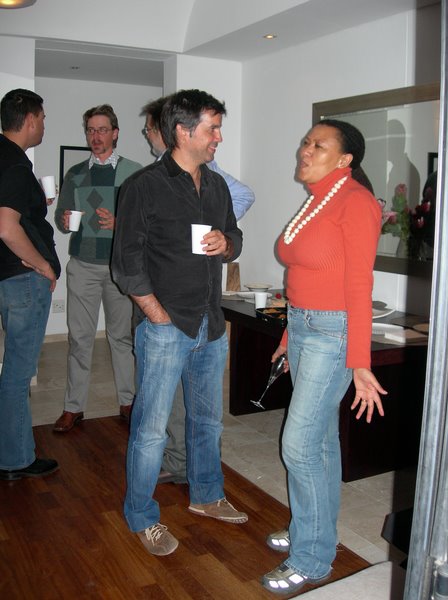
For those of you who don't get this Western Cape 'in joke' see
http://iafrica.com/news/features/958940.htm to get a hint of the issue

Also Google 'Koeberg power outage' to read lots about it.

05 July, 2006

Bioregional Programmes Newsletter - E Cape ...

The Bioregional Programmes Co-ordination Unit, SANBI, produces a quarterly newsletter that features information about what is going on in the Eastern Cape regarding all the bioregional programmes that are active in the province, including C.A.P.E., STEP and SKEP.

Contact:

Tracey Cumming
Project Developer
Bioregional Programmes Co-ordination Unit
South African National Biodiversity Institute
Tracey.Cumming@deaet.ecape.gov.za
Tel (041) 508 5849 Fax (041) 585 1964